 WebMail


This camera trades pictures for AI poetry | TechCrunch
Have you ever stood in front of a redwood and thought, “Wouldn't it be nice if it was a poem instead of a tree?” Neither did Joyce Kilmer. However, Kellan Caroline Zhang and Ryan Mather set out to bridge the gap between AI tech and poetry with their fascinating mind creation. Poetry Camera. The open-source device combines cutting-edge technology with artistic vision, resulting in a creation that pushes the boundaries of both fields.
At first glance, the Poetry Camera looks like just another gadget in the ever-evolving landscape of digital devices. However, upon closer inspection, it becomes clear that this is no ordinary camera. Rather than simply capturing images, the Poetry Camera takes the concept of photography to new heights by creating thought-provoking poetry (or well, as AI poetry might get) based on the visuals it's exposed to. takes the concept of photography to new heights by creating
Zhang and Mather, the project's masterminds, have seamlessly combined their expertise in technology and art to create a technically impressive and aesthetically pleasing device.
The story of the Poetry Camera began as a personal passion project for Zhang and Mather, who found themselves fascinated by the idea of merging their love of technology with their appreciation of the arts. In the early stages of development, they spent countless hours tinkering with different components and experimenting with different AI models to bring their vision to life.
“The genesis of the project is when I got access to the GPT-3. My first instinct was to play Dungeons & Dragons with it because I'm a nerd. I thought, 'If this thing can play Dungeons & Dragons, it's inspired. Which will happen.' And yes, it worked for him. It took some elbow grease to make it work, back when you had to, maybe as a project Make it,” says Mather. “What if you took a camera, but it was a reaction to Instagram culture? What if text instead of image comes out? … Everyone prefers the book version over the movie, so it's like that to capture the moment.
As they refined their prototype, Zhang and Mather began sharing their creation with friends and family at social gatherings. The response they received was nothing short of astounding. People were fascinated by the idea of a camera that could create poetry based on what it saw. The device quickly became the center of attention, sparking lively debate and igniting the imagination of all who encountered it.
These early reactions were a powerful motivation for Zhang and Mather to improve their invention. He felt that the Poetry Camera had the potential to bridge the gap between technology and art in a way that resonated with people. As word of the poetry camera spread, the two were inundated with inquiries from curious individuals eager to experience the device for themselves. This interest led them to consider the possibility of turning their project into a potential commercial product, making the magic of the poetry camera accessible to a wider audience.
Technology
At the heart of this innovative device is the Raspberry Pi, a single-board computer the size of a credit card that packs a powerful punch. This small but powerful component acts as the brain of the poetry camera, enabling it to capture images and create poetry from OpenAI's GPT-4.
A Raspberry Pi captures the image and then uses computer vision algorithms to analyze the visual data. AI models then interpret the image, identifying important elements, colors, patterns and emotions within the frame. This information serves as the basis for the poetry generation process.
Zhang pointed to the camera in our Zoom interview:

Ryan Mather and Kellan-Carolyn Zhang in an interview with Your Correspondent. Image credit: Screenshot from Zoom
And a poem came:
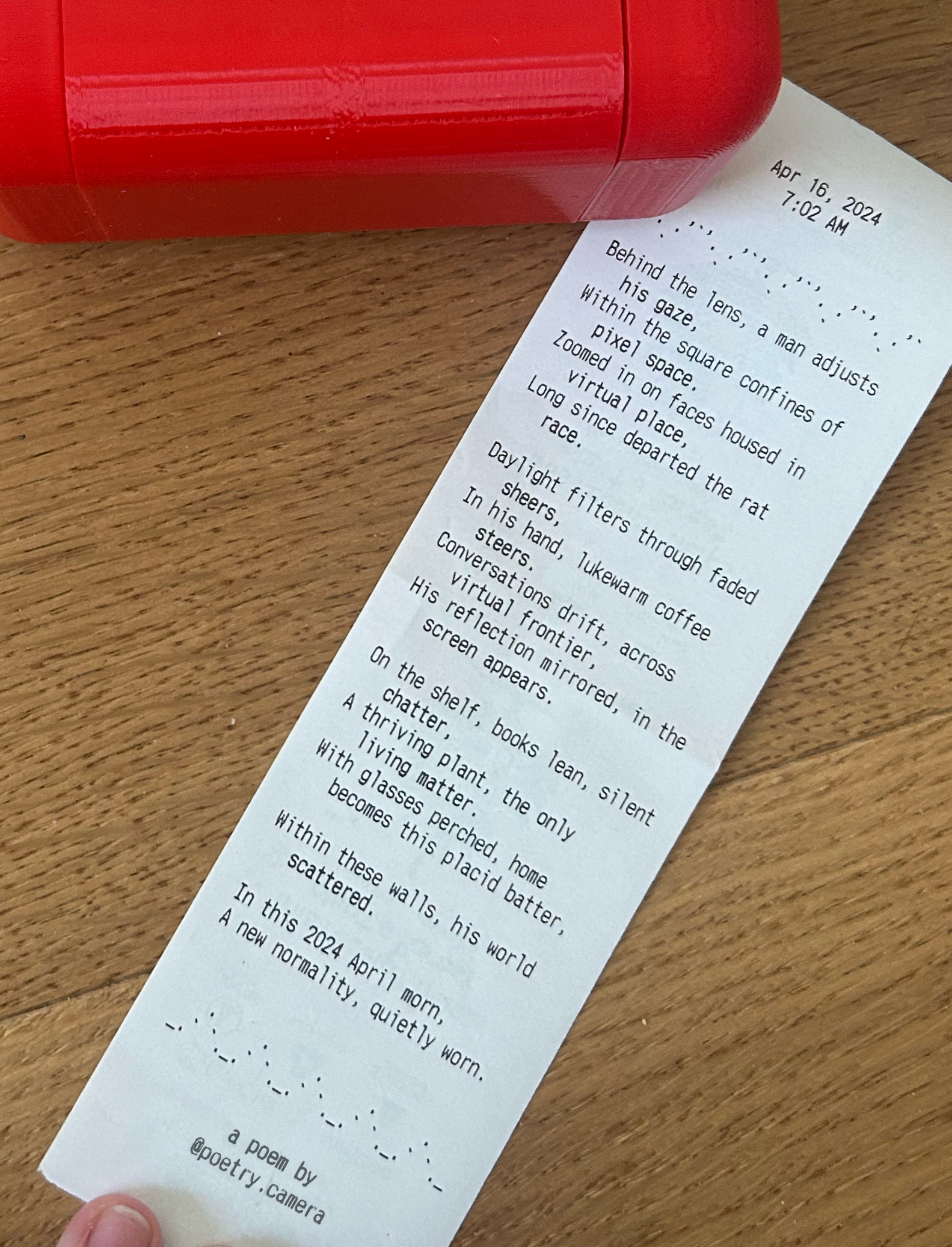
Poem produced and printed by Poetry Camera (transcribed below). Image credit: Poetry Camera
Behind the lens, a man adjusts his gaze,
A pixel space within the bounds of a square.
Zoomed in on faces placed in virtual space,
Long ago left the rat race.Daylight filters through opaque shades,
He has a cup of hot coffee in his hand.
Across virtual borders, communication increases,
Its reflection is displayed on the screen.Books bent on shelves, silent chatter,
A flourishing plant, the only living substance.
With the glasses on, the house becomes its silent beater,
Within these walls, his world was shattered.On this morning in April 2024,
A new normal worn in silence.A poem by @poetry.camera
Zhang theorizes that the reference to “departing the rat race” is a reference to my Hawaiian shirt.
The inventors tell me that the poetry camera's output is not limited to a single format. Since the tool is open source, users can choose from different poetic forms such as haiku, sonnet or free verse depending on their preferences and ability and willingness to get involved with the source code.
As the Poetry Camera continues to evolve, Zhang and Mather are looking for new ways to expand its capabilities. They continuously refine and refine AI models, enhance device gestures and experiment with advanced natural language processing techniques. The goal is to create a device that evokes poetry and engages in meaningful dialogue with users, creating a deeper connection between technology and the arts.
The intersection of art and technology
The poetry camera serves as a testament to the incredible potential at the intersection of art and technology. By harnessing the power of AI and machine learning, Zhang and Mather have created a device that not only captures the beauty of the world around us, but also interprets it in ways that are amazing. But be touching. Technically, it's simple, but I like how the Poetic Camera makes things accessible. It becomes so easy to dare to dream and push the boundaries of what technology can achieve.
Screen dominates our daily life. Poetry Camera offers a refreshing departure from the norm. Instead of relying on a digital display to display its poetic results, the device uses a more immersive and immersive method of interaction. The created poems are printed on paper, creating a physical form of artistic experience. The ephemeral nature of art goes a long way with the poetry camera.
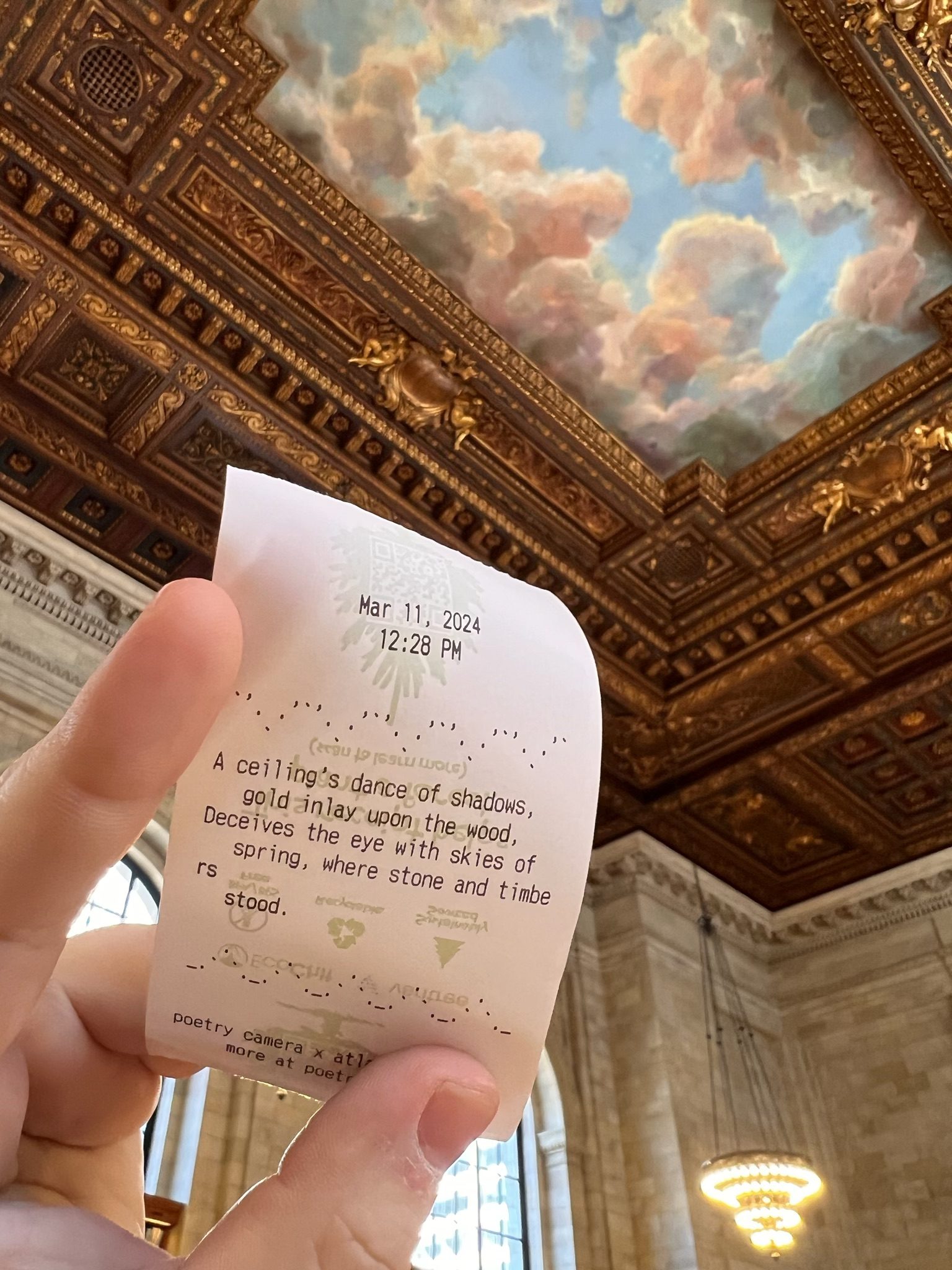
Another sample poem. Image credit: Poetry Camera
“We don't store any images or poems digitally. There are a few reasons for this: One, it's convenient. Two: privacy. Third, it adds extra meaning to the poems if they're like this timepiece. If you lose it, it's gone,'' explains Mather.
We've seen new UIs with products like Plaud and the Humane Ai Pin—and this device continues to do so. This allows users to disconnect from the constant barrage of visual stimuli and engage more mindfully and thoughtfully with Poetry Camera's creations. Not to get all art student, but the visceral experience of holding a printed poem in my hand is an invitation to contemplate words, appreciate the beauty of language, and connect deeply with the artwork.
The design philosophy extends beyond the device, influencing the entire user experience. Zhang and Mather have carefully crafted the Poetry Camera to foster a sense of wonder and discovery. Capturing an image, waiting for the AI to create a poem, and then receiving the printed output creates a sense of anticipation and wonder, increasing overall engagement with the device.
Mirroring the future of AI and personal computing
Zhang and Mather's design philosophy for the Poetry Camera reflects their broader vision for the future of personal computing and AI. He believes that technology should be seamlessly integrated into our daily lives, enhancing our experiences without overwhelming us with constant stimuli. By creating a device that prioritizes simplicity and artistic expression, they are challenging the status quo and paving the way for a new era of technology.
“I think poetry cameras are a microcosm of what will happen to a lot of industries with AI. Poetry cameras are the opposite of traditional discipline: You've never met someone who says, 'Oh, I'm a poetry photographer for corporate events,' Zhang said, laughing It's a pleasure to interact with: People find childlike joy in his lively personality.
what's next?
As the Poetry Camera captivates audiences and generates buzz, Zhang and Mather are pondering the future of their innovative creation. While the device began as a personal passion project, the overwhelmingly positive response has led them to explore the possibility of making it commercially available to a wider audience.
“After the first 100 times people asked, we said, 'We're not selling it,' but after 101 questions, we started thinking about it in more detail, wondering if we should sell it to people.” should be made available,” Zhang mused. “But at the same time, it's an art project, you know? Our initial reaction was to take capitalism out of it.
However, in keeping with their commitment to sustainability and mindfulness, Zhang and Mather are taking their time before ramping up mass production. Instead, they are taking a more measured approach, with the potential for limited product drops that prioritize quality over quantity. By carefully controlling the production process, they aim to ensure that each Riya camera is manufactured with meticulous attention to detail and meets their high standards for performance and durability.
I challenged the team to buy a hardware product: phones have cameras, internet connections and screens. Wouldn't it be more sustainable to use pre-existing hardware?
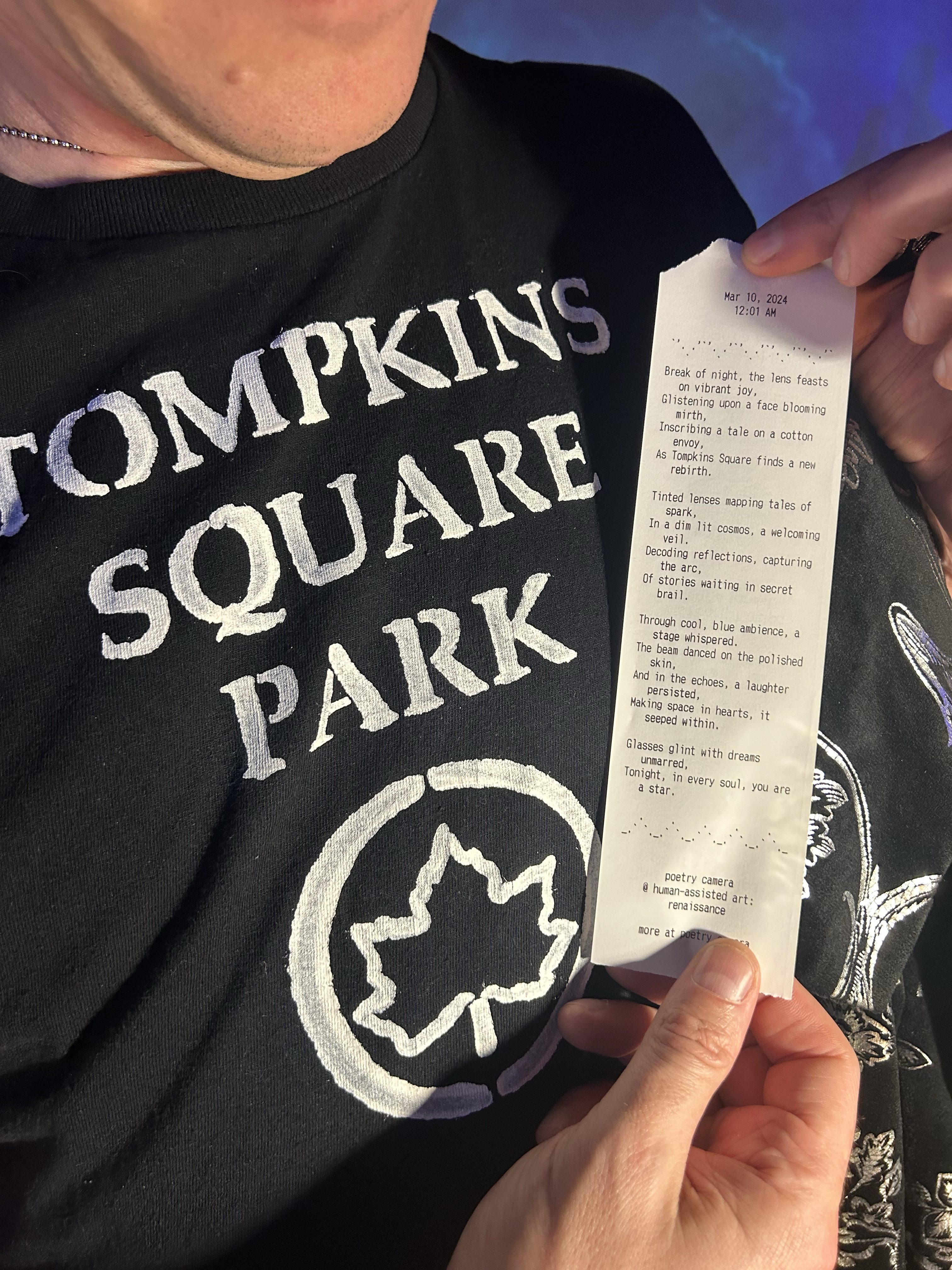
Another sample poem, in the background, with the person who inspired it. Image credit: Poetry Camera
“The most sustainable thing would be to build nothing at all,” agrees Zhang. “But we started it in the beginning. An open source DIY projectAnd we had all the instructions online. It was just that it's hard for people to put together all the different parts they need. In the beginning, we played with the idea of making a cardboard wall. But what I've noticed that people love and want to play with is the aesthetic variety of the Poké ball polish products. I think that to bring the poetry camera to life in its full form, it has to be a polished looking product. I don't know how to approach it with sustainability in mind, but it's important to us.”
Looking ahead, Zhang and Mather envision a future where the poetry camera is not just a new tool but a catalyst for change in how we interact with technology and art. They hope their creations will inspire others to explore the intersection of these two fields, pushing the boundaries of what is possible and creating new forms of expression.
I love living in a world where passionate hobbies intersect with art and technology, and this project fits right into that Venn diagram.
“For me, it's art because it's about expression. It's a vehicle for creating a world that we want to see, a world where people can play with this new technology: AI is all. It's not doom and gloom, and it's not just about AI imitating humans in a deeper, faster and worse way,” Zhang concluded. “It's about creating something completely new with your new technology and bringing out that inner child again. For this project, it's not about making money — it's about re-creating that childlike wonder. “
If you want to see the camera in action up close, TikTok seems to be the best resource..


