 WebMail


New Rumor Suggests Intel Core Ultra 200V Lunar Lake Hits 4100 Points In TimeSpy At 30W
According to new benchmarks and power measurements from Jaykihn, which also revealed the Intel Core Ultra 200V lineup, the integrated Xe2 graphics in the upcoming Intel Lunar Lake processors could offer a competitive edge over AMD's Strix Point. Both products are expected to launch in the next quarter.
Officially, Intel Lunar Lake targets low-power systems, such as lightweight laptops typically using U-series (15-30W) processors, while Strix Point is powered by 15W to 54W power consumption. Focuses on systems. The Intel CPU, featuring an all-new CPU architecture, an upgraded NPU (AI Accelerator), and all-new Xe2 graphics, is shaping up to be one of the most exciting products Intel has released in a while. Is.
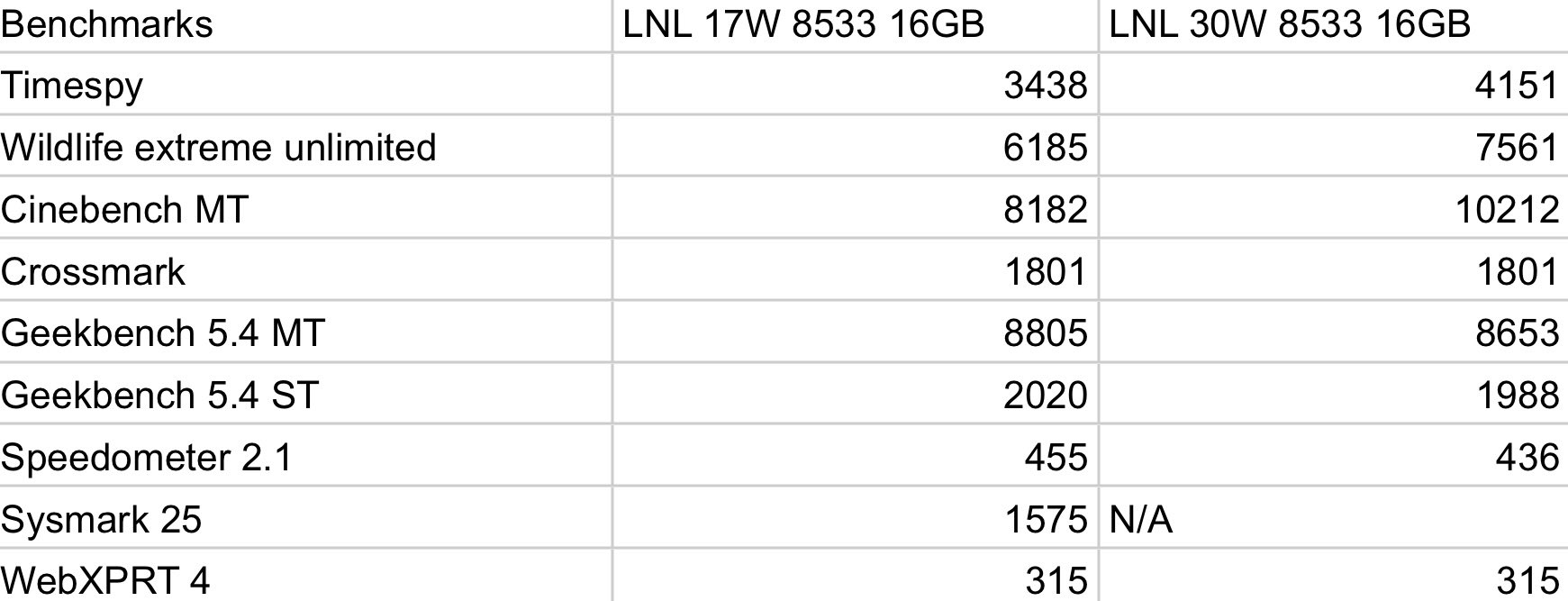
The graphics are expected to be released as Arc A130V or 140V SKUs with 8 or 7 Xe2 cores respectively. These new Battlemage-based GPU cores are expected to feature in discrete desktop GPUs, possibly as early as next year. According to reports, the Intel Lunar Lake GPU is already performing impressively in the 3DMark Time Spy tests, scoring 3438 points at 17W and 4151 points at 30W.
First, Intel Lunar Lake uses a memory-on-package (MoP) configuration, with 16GB or 32GB of LPDDR5X-8533 memory soldered onto the base tile. As a result, power settings cannot be directly compared to AMD Ryzen or Intel Meteor Lake, as they do not include memory power consumption, which is expected to be around 2-3W.
Second, memory speed can greatly affect TimeSpy's performance. The Core Ultra 7 155H processor (with 8 Xe-Cores) can easily outperform the Core Ultra 9 185H if faster memory is used.
According to Goldner Pig Upgrade, AMD Strix Point APUs are expected to achieve 3500 points in TimeSpy at 15W and over 4000 points at 54W. This indicates strong performance at low power settings for AMD's architecture. However, it is important to note that these power settings are not directly comparable due to differences in memory power consumption.
If both reports are correct, both architectures will provide attractive options for low-powered gaming.
The gaming handheld market is likely to see significant growth with these new architectures. As for Intel Lunar Lake, at least three gaming-specific devices using this architecture have already been announced.
Source: Jackiehan
through Video cards


