 WebMail


Don’t buy these dangerous USB-C accessories
If you've ever tripped over a power cable and dropped your phone, tablet, or laptop, you've probably wondered why, oh why, the connector tip doesn't have a magnetic safety release like Apple's MacBooks do. And what about Microsoft? Its Surface Laptop.
But you've found an inexpensive solution: an $11 magnetic tip adapter that attaches to any USB-C cable! Problem solved.
Unfortunately, while the no-name adapter from Amazon seems like a great idea, there's actually plenty of evidence to suggest that you're putting your hardware at risk with them.
Risks cited by USB-C experts include:
- Risk of static electricity discharge.
- Data loss and performance degradation from electro-magnetic interference from exposed POGO pins (those little metal pins that push out to make contact).
- Risk of arcing damage across pins in high humidity environments.
- Potential for debris to reduce exposed magnetic pins.
- It's not officially part of the USB-C specification.
The last point may sound like a drunken sports bar argument over an esoteric NFL rule, but it may actually be the best reason not to buy a magnetic tip adapter.
Look for those magnetic connectors!
As USB-C was designed around the assumption that a USB-C cable would be plugged into a USB-C port — not attached to a magnet — engineers didn't account for side effects. For example, USB-C is designed to anticipate a laptop drawing 65 watts so that its cable is suddenly unplugged and cut off the power for a set amount of time, reducing the risk of arcing. could
All that engineering goes out the window when you attach a magnet to the end of the cable, which can be detached very quickly. If electricity is still flowing through the cable, the risk of arcing increases.
But, you say, “Apple and Microsoft use magnetic connectors on their laptops and they're perfectly safe.”
Yes they do (and Microsoft has also filed a patent on a USB-C magnetic connector that it hasn't yet implemented), but both device makers likely put the engineering work behind their proprietary connectors and chargers. I have put it in order to calculate the risk. There's money to cover damage and data loss from sudden disconnections – and to stand behind the product.
Further reading: Best USB-C Cables 2024: Get Standard Charging and Data Transfer
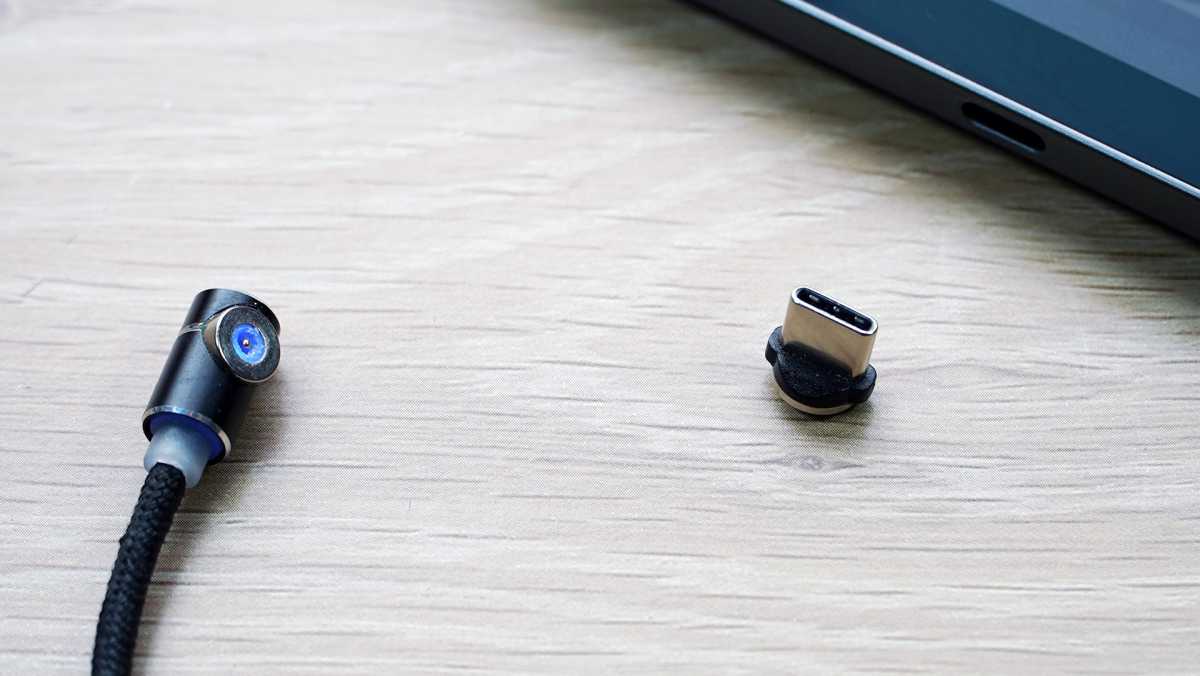
Magnetic USB-C adapters and cables pose a real risk of damaging your hardware.
Magnetic USB-C adapters and cables pose a real risk of damaging your hardware.
Michael Crider
Magnetic USB-C adapters and cables pose a real risk of damaging your hardware.
Michael Crider
Michael Crider
You're unlikely to see this level of engineering work from a small vendor churning out an $11 magnetic adapter. And while you'll find anecdotal reports of people who say they've had “no problems at all” using these magnetic adapters, you'll also hear about damaged phones and laptops using these adapters. Many anecdotal reports can be found.
And those reports are consistent with warnings of interference, and arcing toward charging ports struck by metal debris sucked into the magnetized connectors.
On the Framework laptop forum, a customer posted his bad experience with a magnetic tip adapter: “I bought one of those magnetic USB-C cables and almost fried my laptop with an exposed plug. There is static electricity. The laptop failed to post, and the blinking lights indicated a memory failure with error code 00001110.” This person wrote. “The next day, it was fine, which was weird. Memory tests show no problem. Warning signs that you're about to fry something: The display will crash or suddenly go black during use.
(The) solution is to remove the USB-C cable and its detachable plug from the laptop,” the person wrote. “Of course, there are a few threads about magnetic USB-C cables here and there. , they warn you not to use them, but I didn't realize until then that it was a problem.”
And on the USBHardware Reddit forum where this has been a pin warning for over three years I found this report:
“I have a notebook that has been burned by an accidental magnetic connector attached to a charger. I then inspected the connector parts with a magnifying glass to see if it could prevent such accidents. Well done. Actually, I can't understand how it happened. But, on the other hand, the fact is that I stopped using them Also recommended it to my friends.
There are more to be found, but we'll stop with our parenting lecture. Ultimately it's up to everyone to decide how comfortable they are with the risk of using a magnetic adapter, and whether you're going to kill your laptop, tablet, or phone, tripping over a cable with a damaged port or lap. The relative risks of the top have to be weighed. Using a $11 magnetic adapter
As for me, I'll pass, but you'll have to decide for yourself where you stand.
Further reading: Samsung Galaxy Owners: Buy This GAN Charger For Faster Charges


